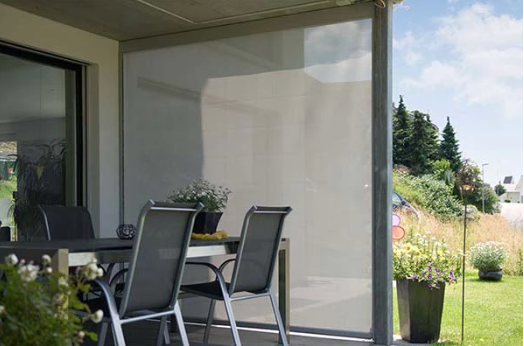
An outdoor area can look finished and still fail in everyday life. Afternoon sun turns the table into a hot surface. A light side wind keeps moving napkins and curtains. Low-angle glare makes a laptop or menu difficult to read. Neighbours can see directly into the seating area. When the weather changes, the terrace is abandoned even though the roof is still doing its job.
A roof solves only the weather arriving from above. Many patios, balconies, pergolas and hospitality terraces also need adjustable protection at the sides. That is where motorized zip screen blinds can help: the fabric rolls into a protective cassette, while zip-guided edges travel inside side rails to keep the screen better controlled than a loose hanging shade.
The short answer
Motorized zip screen blinds are retractable exterior screens designed to manage side sun, glare, privacy and exposed airflow around windows, balconies, pergolas and covered terraces. Their value is not that they create a sealed room. Their value is that they let the user lower protection when conditions become uncomfortable and retract it when an open view and free circulation are preferred.
Why a roof alone often leaves the space uncomfortable
Outdoor comfort changes throughout the day. At noon, overhead shade may be enough. In the morning or late afternoon, sunlight enters from the side. On an exposed balcony, even moderate wind can make a quiet seating area feel restless. A restaurant may need privacy for one booking and an open view for the next.
Exterior shading also works before solar radiation reaches the protected surface. The U.S. Department of Energy notes that exterior sunscreens and shades can reduce unwanted solar heat gain, while selection should still consider climate, daylight and the complete building design. See the Department of Energy guidance on windows and solar heat gain.
How a zip-guided screen works
A typical system combines five coordinated parts: an aluminum cassette, a roller tube, outdoor mesh fabric, zip-guided side rails and a bottom rail. A tubular motor turns the roller so the screen can travel up or down by remote control, wall switch or a compatible grouped-control solution.
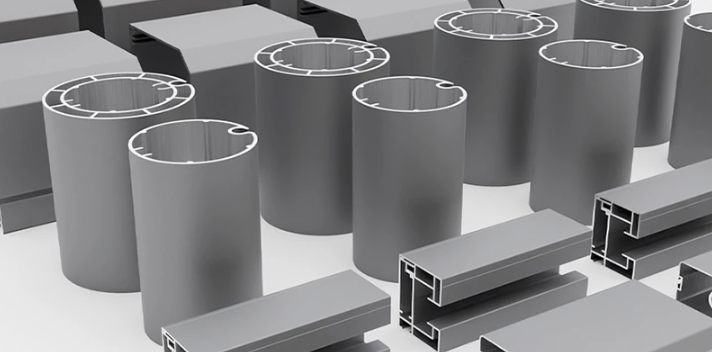
The zip edge is important. It keeps the fabric engaged in the side channel instead of allowing the edge to move freely like a basic drop shade. Final stability still depends on the opening size, fabric, fixing surface, guide design and local exposure. For that reason, a responsible supplier should review dimensions and site photographs before confirming the configuration.
7 everyday problems motorized zip screen blinds can solve
1. Low-angle sun reaches underneath the roof
A pergola, canopy or balcony slab can block overhead sun yet do little against the bright light entering from the east or west. The result is a strange contradiction: the space is technically shaded, but users still move their chairs or leave at the hottest time.
A lowered exterior screen intercepts part of that side exposure before it reaches the seating area or glazing. Fabric color and openness affect the balance between solar control, daylight and outward visibility, so the darkest fabric is not automatically the right choice.
2. Glare makes screens, menus and conversations uncomfortable
Glare is not the same as heat. A terrace may feel cool enough while direct light still reflects from tables, glassware, televisions or laptop screens. This is especially frustrating in outdoor dining, hotel lounges and mixed work-and-leisure spaces.
Mesh fabric can soften the contrast without requiring an opaque wall. The goal is usable light, not simply maximum darkness. Buyers should compare real fabric samples from both sides and in daylight before approving a large project.
3. Side wind keeps disturbing an otherwise usable area
Wind rarely arrives in a perfectly convenient direction. A roof may be stable while side gusts move cushions, table settings and lightweight decorations. Loose blinds can flap, create noise and leave gaps at the edges.
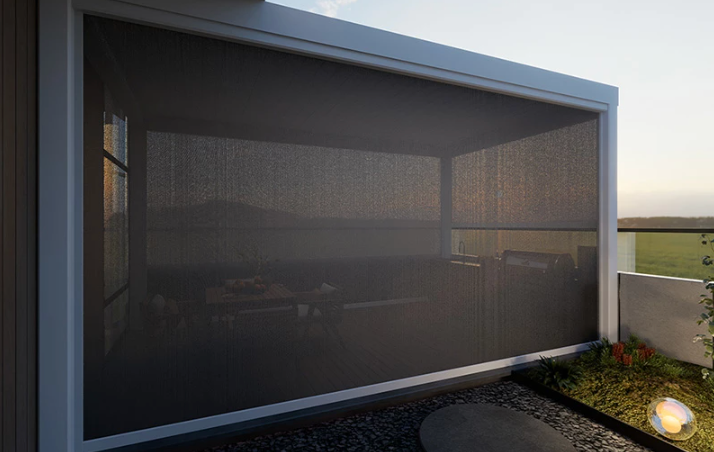
A zip-guided screen creates a more controlled side barrier. It can reduce everyday exposed airflow, but it is not a storm shutter. The screen should be retracted when conditions exceed the approved limit, and any wind rating must be confirmed for the exact size, fabric, guide system and fixing method.
4. The seating area feels too visible
A balcony facing another building, a street-level café or a pergola beside a neighbouring property can feel exposed. Permanent walls solve privacy but also remove the view, daylight and openness that made the outdoor area attractive.
Selected mesh fabrics can reduce visibility into the space during suitable lighting conditions while preserving a clearer outward view. Privacy is not identical at every hour: when the protected side is brightly illuminated at night, visibility may reverse. Lighting design and fabric choice must therefore be considered together.
5. A restaurant terrace loses tables whenever conditions change
For hospitality spaces, an uncomfortable terrace is not only an aesthetic problem. It can mean unused seating, repeated table moves and an inconsistent guest experience. Fixed enclosure may be too restrictive, especially when the weather is pleasant.
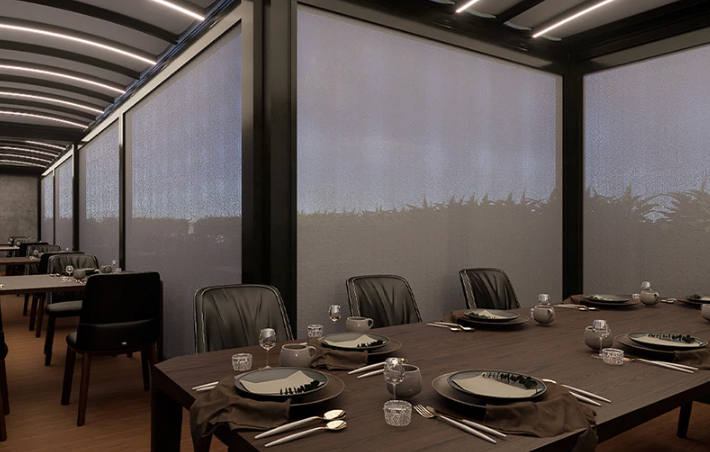
Motorized screens allow staff to adjust the exposed elevation while leaving other sides open. For multi-bay projects, motor groups, control channels, emergency operation and maintenance access should be planned before production—not improvised after installation.
6. Manual shades are ignored because operation is inconvenient
A shading product only works when people use it. If a large blind is heavy, slow or awkward to reach, it often stays in one position. That defeats the purpose of a retractable system.
A concealed tubular motor makes regular adjustment easier. Remote, wall-switch and compatible grouped-control options can be matched to the project. The electrical plan must confirm voltage, motor side, cable route, drainage separation and access for future service.
7. The space needs protection sometimes—but openness at other times
Permanent glazing and solid walls create a defined room. That can be correct for some projects, but it may be excessive when the real need is temporary shade, privacy or wind moderation.
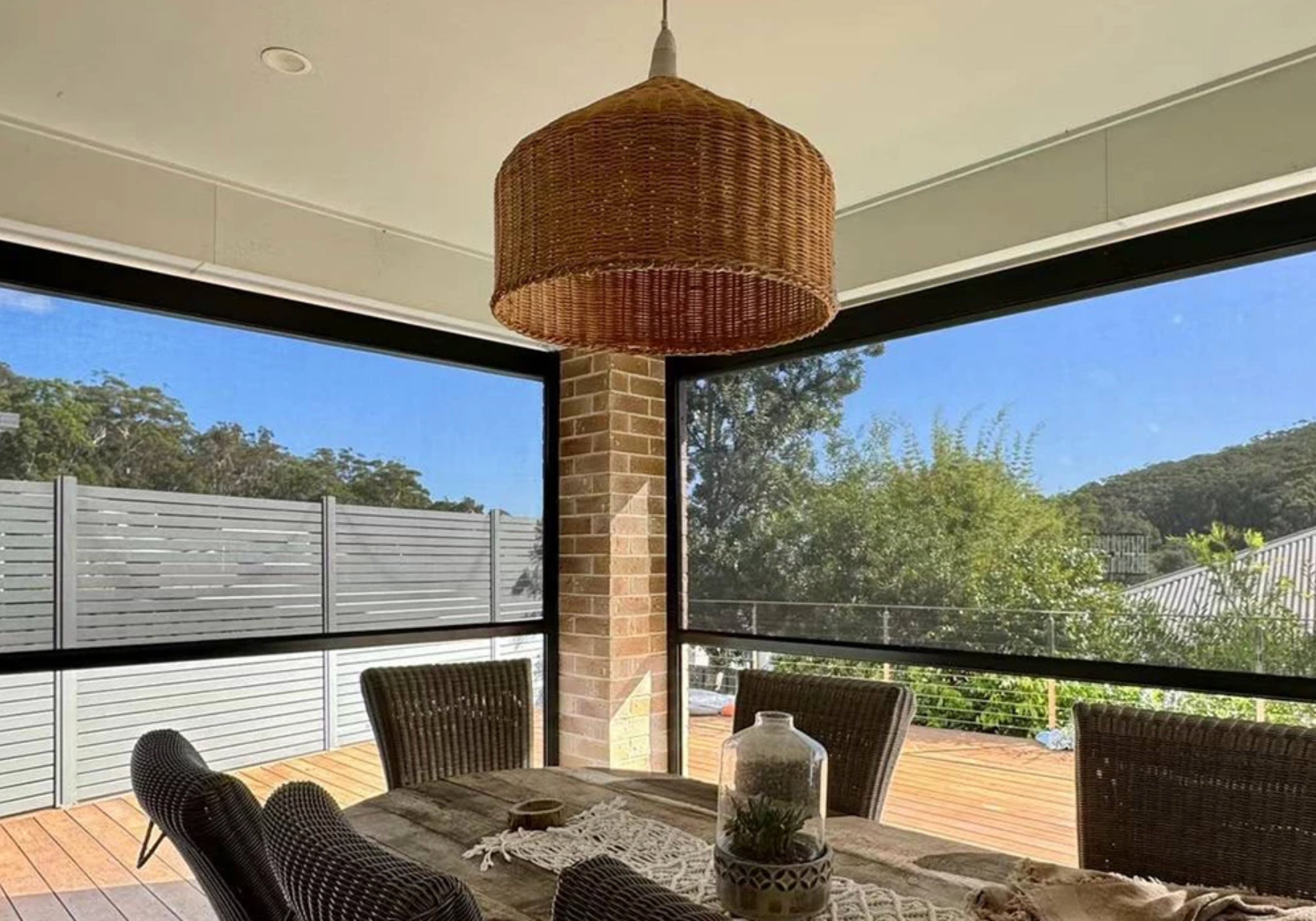
A retractable screen preserves that choice. It complements an adjustable roof such as a motorized louvered pergola: the roof manages conditions from above, while the screens address the sides. Our earlier guide explains the roof side of this combination in seven problems a motorized louvered pergola can solve.
What a zip screen does not do
- It does not create a fully sealed, insulated room. Mesh permits some airflow and is not a substitute for doors, glazing or a tested building envelope.
- It is not a storm shutter. The blind must be operated within the project-approved weather conditions.
- It does not guarantee complete privacy in every lighting condition. Night-time lighting can change the view-through effect.
- It is not automatically waterproof. Wind-driven rain can reach the edges or pass through mesh; drainage and floor design remain important.
- It cannot compensate for weak fixing. The cassette and guide rails need a suitable, accurately measured structure.
Mesh, blackout or another enclosure?
| Option | Best when | Main trade-off |
|---|---|---|
| Open-weave outdoor mesh | Daylight, airflow and outward view matter | Less privacy and weather separation than denser fabric |
| Denser solar-control mesh | Glare and privacy are higher priorities | Reduced daylight and view-through |
| Full-blackout fabric | Visual separation or presentations require darkness | Minimal view and less natural light |
| Sliding glass or fixed wall | A more sealed, permanent room is required | Higher structural complexity and less retractable openness |
The Department of Energy’s building guidance also emphasizes that shading must be considered with orientation, glazing and climate. For a deeper technical reference, see its guide to energy-efficient window performance and exterior shading.
10 questions to answer before requesting a quotation
- What is the finished opening width and height at several measurement points?
- Is the screen mounted between posts, on the face of a wall or inside a prepared recess?
- Which direction receives the strongest sun and prevailing wind?
- Is the priority glare control, privacy, airflow, view-through or blackout?
- What frame and fabric colors must match the surrounding architecture?
- Where can the motor cable and power supply be routed safely?
- Should screens operate individually, in groups or through compatible automation?
- Can the cassette and guides remain accessible for inspection and cleaning?
- What local loads, regulations or project documentation must be satisfied?
- How will the modules be packed, transported and installed at the destination?
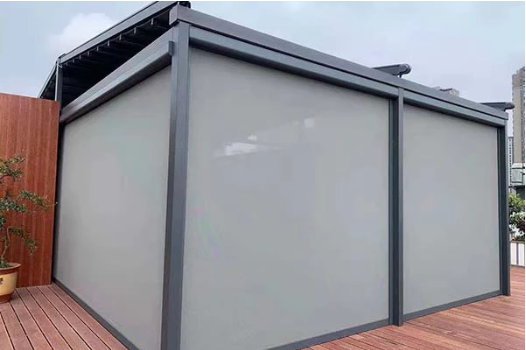
Why project review matters more than a generic product claim
The same blind behaves differently in a sheltered ground-floor patio and an exposed upper-level opening. LINGYUE reviews the opening, module layout, cassette, guide rails, fabric, motor position, control method and fixing conditions before production. You can review our manufacturing capabilities, quality-control workflow and warranty and after-sales approach before starting a project.
Frequently asked questions
Are motorized zip screen blinds completely windproof?
No blind should be described as universally windproof. Zip-guided edges improve fabric retention compared with a loose drop shade, but approved performance depends on size, fabric, guide rails, fixing and site exposure. Retract the screen when conditions exceed the confirmed limit.
Can I still see outside through the screen?
Many mesh fabrics preserve useful outward visibility, but the result depends on openness, color and the light level on each side. Request physical samples and evaluate them in conditions similar to the project.
Can zip screens be added to an existing pergola?
Often yes, provided the existing structure has suitable, straight fixing surfaces and enough space for the cassette and side rails. Send clear photographs and finished opening dimensions for an engineering review.
What information is needed for a custom quotation?
Provide opening width and height, quantity, application, destination country, site photographs, preferred color, fabric goal, power supply and desired control method. These details allow the supplier to ask the correct technical questions.
How should the guide rails be maintained?
Keep the side channels free from leaves, sand and hard debris. Clean fabric according to its care instructions, inspect fixings periodically and avoid forcing the motor if the bottom rail or fabric is obstructed.
Can several blinds operate together?
Compatible motors can be planned for individual or grouped control. The number of screens, control channels, motor loads and cable routes should be confirmed before production.
Make the side conditions part of the design
A comfortable outdoor project needs more than a roof. Send LINGYUE your opening dimensions, quantity, destination and site photographs. We will review the screen modules, fabric direction, cassette, guide rails, motor position, fixing and control requirements.