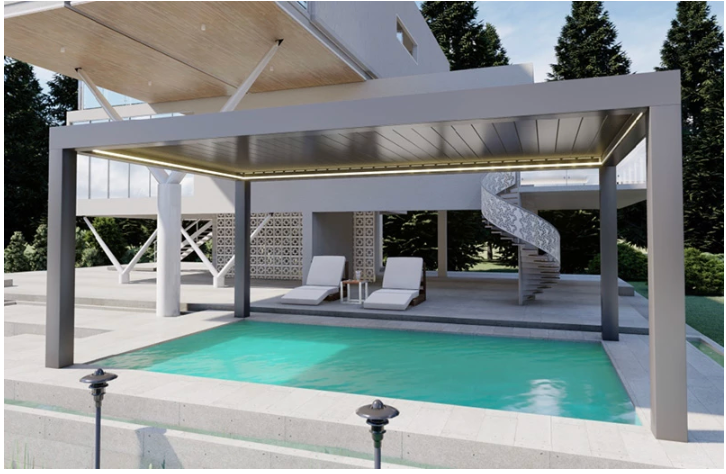
A weather resistant pergola can protect an outdoor space from ordinary rain, sun and project-defined environmental loads—but no responsible supplier should call every pergola “waterproof, snowproof and typhoon-proof” without knowing the site. The costly failures usually begin before the storm: an undersized gutter, an anchor fixed into an unknown slab, a snow value copied from another country, or a retractable roof left open when severe wind arrives.
The buyer’s pain point is uncertainty. Product brochures show calm weather, while a real project faces wind-driven rain, uplift, drifting snow, blocked outlets, freeze-thaw cycles and salt air. This guide explains how extreme weather affects aluminum pergolas, retractable awnings and rain canopies—and which engineering details make LINGYUE systems a stronger, more serviceable choice.
Can a weather resistant pergola handle rain, snow and typhoons?
The distinction is important because ASCE 7 addresses wind, rain, snow, ice and other loads as coordinated structural design actions. Local building codes decide which values and combinations apply. The National Institute of Standards and Technology explains that building codes establish minimum hazard-resistance requirements, but local authorities may modify model-code provisions.
Professional terms behind storm-ready outdoor systems
- Design wind speed: a code input—not the same as a product’s informal test-fan speed.
- Wind pressure and uplift: forces acting on roof surfaces, frames and connections; they change with height, terrain, shape and openings.
- Continuous load path: the route from louvers or fabric through beams, posts, anchors and foundations into the supporting ground or building.
- Ground snow load: a location-based input converted into roof snow actions after considering geometry, exposure, thermal conditions and drifting.
- Ponding: progressive water accumulation caused by insufficient slope, deformation or blocked drainage.
- Serviceability: limits for deflection, vibration, movement and water management before structural failure occurs.
- Operational wind limit: the wind condition at which a movable roof, awning or screen must be opened, closed or retracted according to its instructions.
How natural hazards affect a weather resistant pergola
| Hazard | Typical effect | Design or operating response |
|---|---|---|
| Heavy rain | Overflow, ponding, splash and leakage at joints | Roof falls, overlap, gutters, outlets, downpipes and maintenance access |
| Typhoon / hurricane wind | Pressure, uplift, vibration and wind-borne debris | Site wind criteria, continuous load path, anchors, foundations and storm operating plan |
| Snow and ice | Vertical load, unbalanced drift and blocked drainage | Project snow calculation, suitable roof configuration and monitored snow-removal plan |
| Flooding | Foundation scour, electrical damage and contaminated water | Site drainage, equipment elevation and post-storm inspection |
| Hail | Dents, cracked plastic panels and fabric damage | Material/test selection and replaceable components |
| Salt air | Accelerated corrosion at cuts, fasteners and interfaces | Compatible finishes, stainless fasteners where specified, isolation and maintenance |
1. Waterproof performance begins with a complete water path
Water resistance is not created by aluminum alone. A closed louvered roof must collect water at the blade edges, transfer it into perimeter gutters, move it to outlets and discharge it through posts or downpipes without overflowing toward doors or electrical equipment. Cross falls, outlet size, debris screens and cleaning access matter as much as the visible roof.
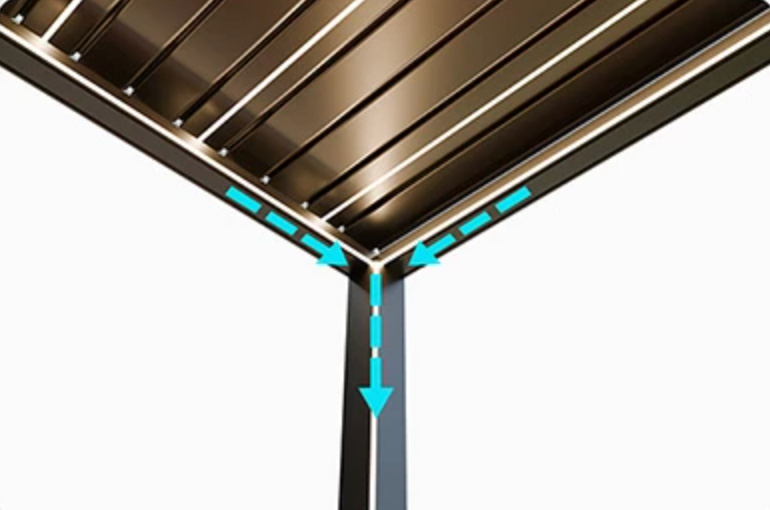
Wind-driven rain is more demanding than vertical rainfall because pressure can force droplets through small openings and from the sides. The roof should therefore be described as a managed outdoor cover, not a sealed indoor room. Optional motorized zip screens can reduce side exposure in approved conditions, but they do not transform a pergola into a tested façade.
2. Snow resistance depends on weight, drift and roof geometry
Fresh snow, wet snow and ice do not weigh the same. Wind can also move snow into an unbalanced drift, loading one bay or roof edge more heavily than another. FEMA’s Snow Load Safety Guide explains that roof geometry and obstructions influence snow distribution. A generic depth such as “30 cm of snow” is therefore not a complete structural specification.
For a fixed or closed rigid-louver configuration, request the allowable project snow action, module size, reinforcement and required blade position. For a retractable fabric roof or folding-arm awning, do not assume it is intended to carry accumulated snow. The operating manual should define when the fabric must be retracted and how snow or ice is handled without damaging motors, crossbars or fabric.
3. Typhoon resistance is a load-path question, not a slogan
A tropical cyclone applies changing positive pressure, suction and uplift. Nearby buildings, roof edges and open sides can intensify local effects. NOAA’s Saffir–Simpson Hurricane Wind Scale is based on maximum sustained wind speed, while the page also warns that surge, flooding and tornadoes are separate hazards. A product claim based on one wind number cannot cover every typhoon scenario.
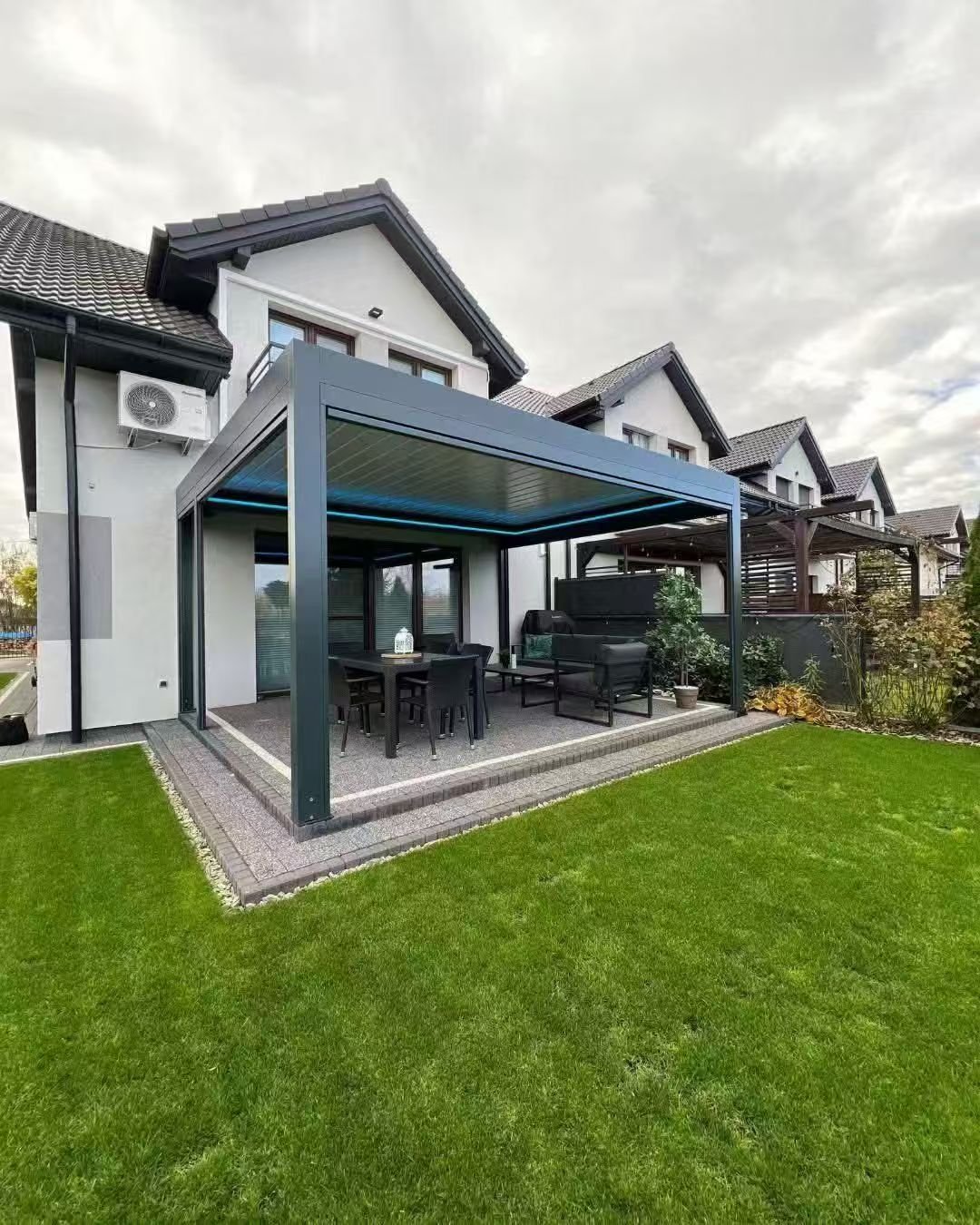
LINGYUE’s weather resistant pergola advantage is configuration flexibility: freestanding or wall-attached layouts, repeatable bays, heavy-type profiles, integrated gutters and compatible side screens can be coordinated around the site. That flexibility still requires correct inputs. Send the installation address, dimensions, mounting substrate, height, surrounding exposure, local wind and snow criteria, roof use and approval requirements before the final quotation.
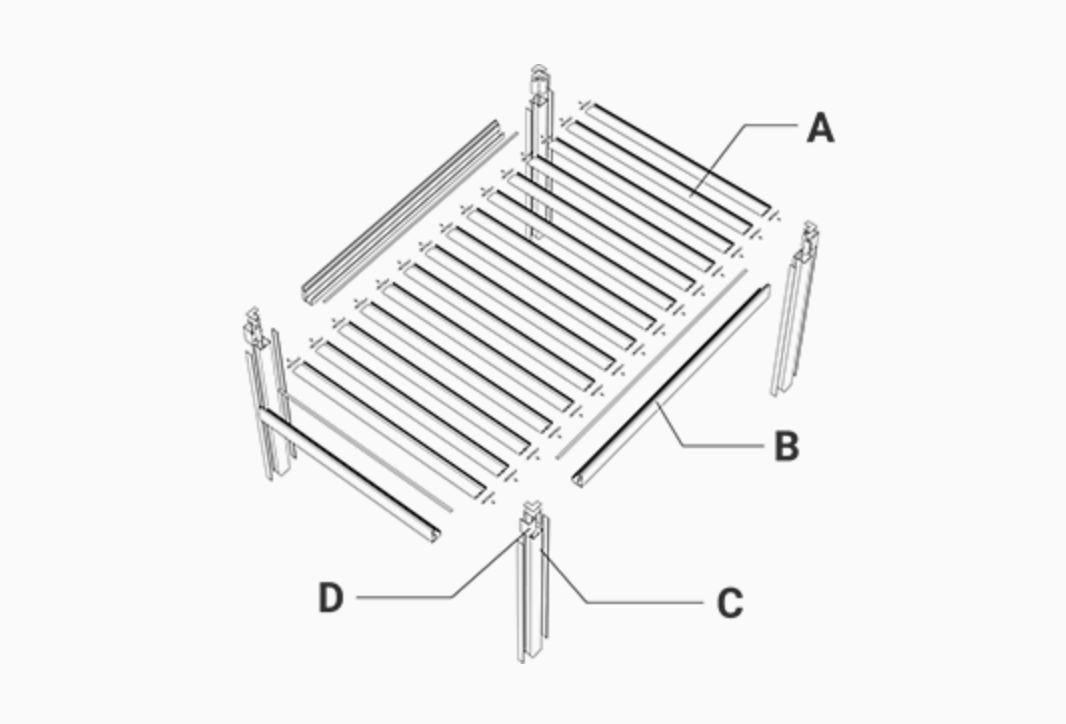
9 critical checks before ordering a weather resistant pergola
1. Confirm the exact site and governing code
Country alone is not enough. Wind, snow, rain, seismic and corrosion exposure can change within the same region. Record the project address and the authority having jurisdiction.
2. Define dimensions and module layout
Width, projection, height, bay count and attachment condition influence both loads and drainage. A modular solution is often safer and easier to transport than forcing one maximum-size bay.
3. Verify the supporting substrate
Concrete strength, edge distance, waterproofing, masonry type and slab thickness affect anchoring. Unknown substrates should be investigated rather than covered by decorative base plates.
4. Request a continuous load-path drawing
The drawing should identify profiles, brackets, bolts, anchors and foundations. Product strength and attachment strength must be checked together.
5. Match the roof type to the hazard
A rigid louvered roof, retractable fabric roof, full cassette awning and polycarbonate rain canopy behave differently. Compare them in our awning vs canopy guide.
6. Calculate the water route
Show falls, gutters, outlets, downpipes and discharge locations. Include blockage allowance, overflow behavior and cleaning access.
7. State every operating condition
Define the required louver, fabric and side-screen position for normal rain, strong wind, snow, maintenance and power failure. Sensors support the plan; they do not replace it.
8. Coordinate corrosion protection
Specify aluminum pretreatment, powder system, color, fastener grade and isolation between dissimilar metals, especially for coastal projects.
9. Plan inspection and replacement
Gutters, motors, seals, fasteners and moving parts require access. Confirm spare parts, maintenance intervals and warranty and after-sales procedures.
Which weather resistant pergola system fits each problem?
| Project priority | Recommended starting point | Important limitation |
|---|---|---|
| Adjustable shade plus integrated drainage | Motorized louvered pergola | Wind/snow design and foundations remain project-specific |
| Fixed translucent rain cover | Aluminum polycarbonate patio canopy | Verify panel, hail, fire and wind requirements |
| Large retractable terrace coverage | Motorized retractable roof awning | Follow the fabric roof’s operating wind and snow rules |
| Façade shade with protected cassette | Motorized full cassette awning | Shade-first product; retract in severe weather |
| Low-angle sun and side exposure | Motorized outdoor zip screen | Not a structural storm shutter |
Product and factory videos: what buyers should inspect
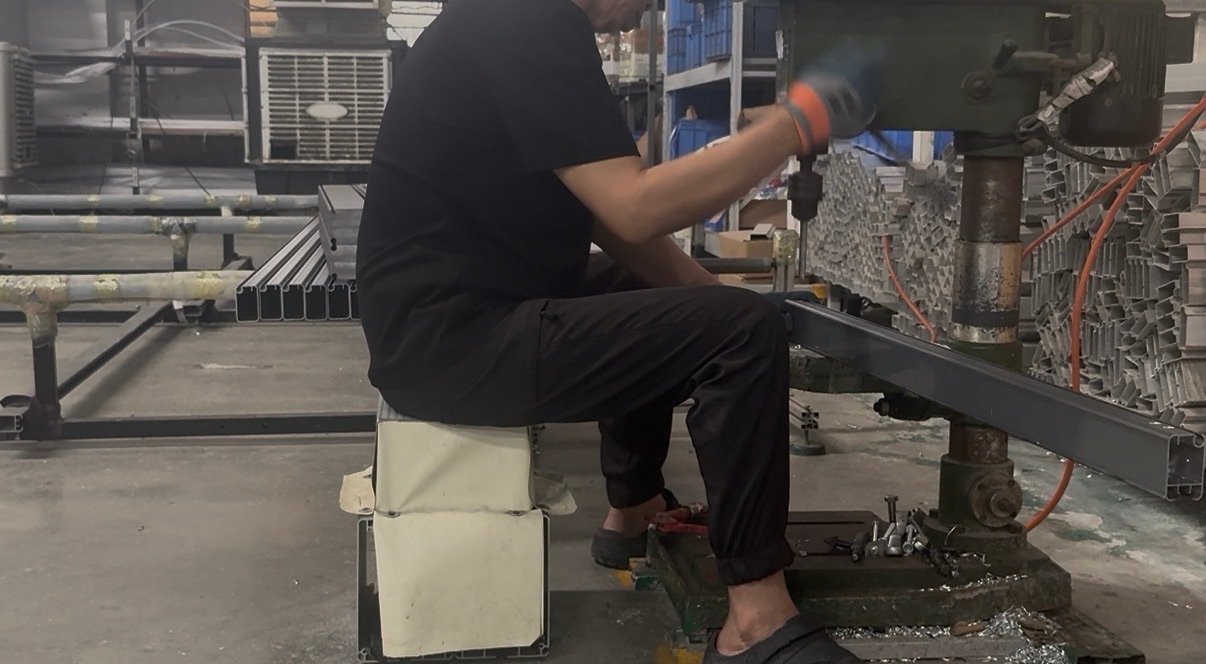
Use video as production evidence, not as a structural certificate. Review the factory process, quality-control checkpoints and product video collection, then request the drawings and documents for your exact order.
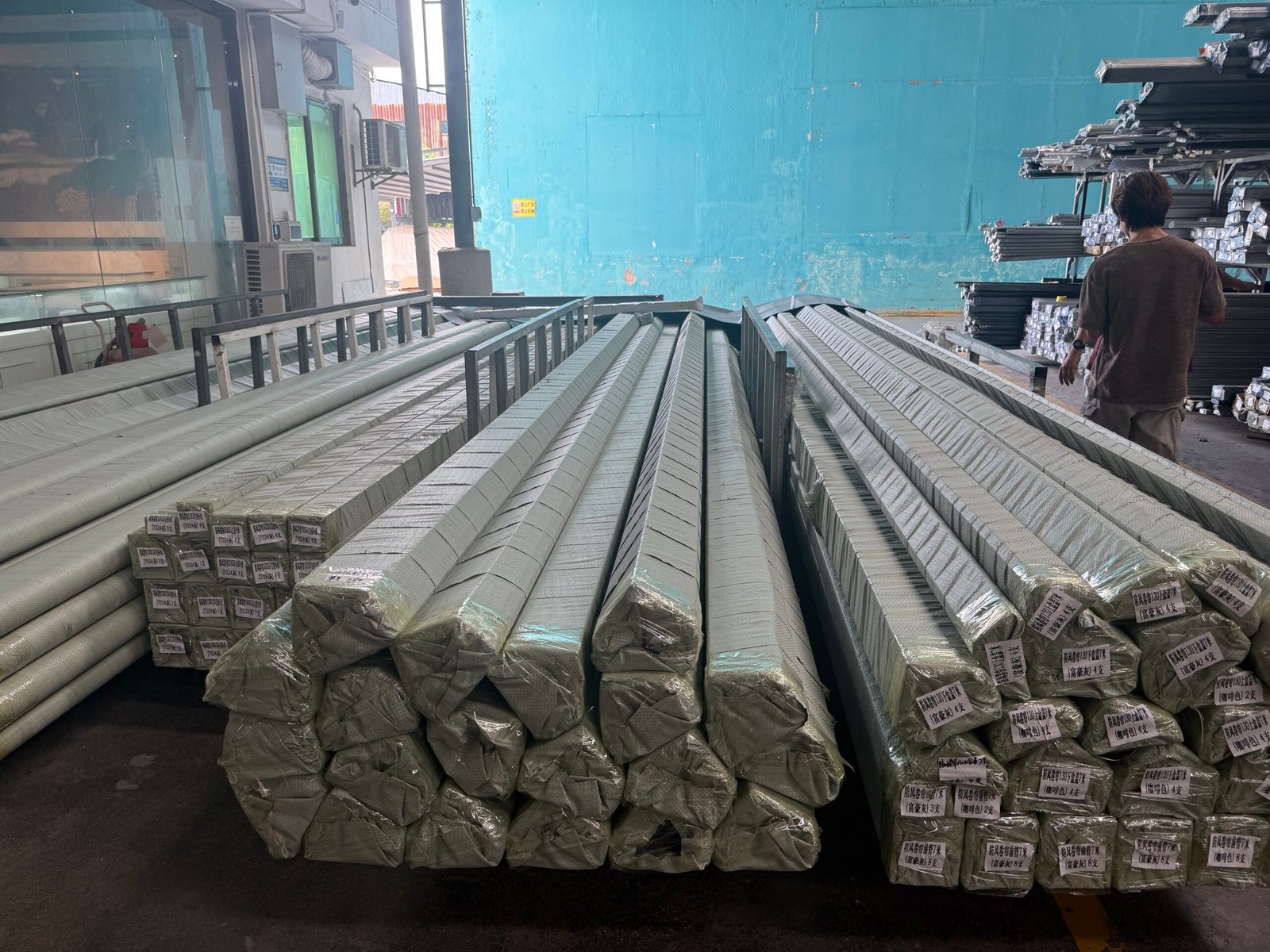
Before, during and after an extreme-weather event
- Before: clear gutters and outlets; test motors, controls and backup operation; retract awnings and fabric roofs when instructed; secure furniture; document the system condition.
- During: do not stand below or operate the product in dangerous wind, lightning or structural movement; follow local emergency guidance.
- After: isolate damaged electrical equipment; inspect anchors, posts, blades, fabric, seals and drainage before reuse; photograph damage and arrange qualified assessment.
Weather resistant pergola FAQ
Is a louvered pergola completely waterproof?
A properly configured closed roof is designed to manage rainfall through overlapping louvers and integrated drainage. Wind-driven rain, side openings, outlet capacity, installation tolerances and maintenance mean it should not be sold as a universally sealed indoor roof.
Can a pergola survive a typhoon?
Only a project-specific review can answer that. The required wind action, site exposure, module, roof state, connections, anchors and foundations must be defined. Avoid universal “typhoon-proof” claims with no calculation or test scope.
Can I leave snow on a closed louvered roof?
Do so only if the project documents state the allowable snow action and operating position. Snow density and drifting vary, and removal can create dangerous unbalanced loading if performed incorrectly.
Do wind and rain sensors make the system stormproof?
No. Sensors improve automation but depend on power, settings, maintenance, location and compatible controls. They are one layer within an operating plan.
What should I send for an accurate quotation?
Send the address, width, projection, height, photos/drawings, substrate, intended use, roof type, accessories, local wind/snow/rain requirements, corrosion environment and approval needs.
Turn weather risk into a buildable specification
LINGYUE combines aluminum profile processing, modular system configuration, drainage components, motorized controls and export packaging in one outdoor-shading workflow. A weather resistant pergola starts with honest site data, then lets the product follow the engineering—not the other way around.