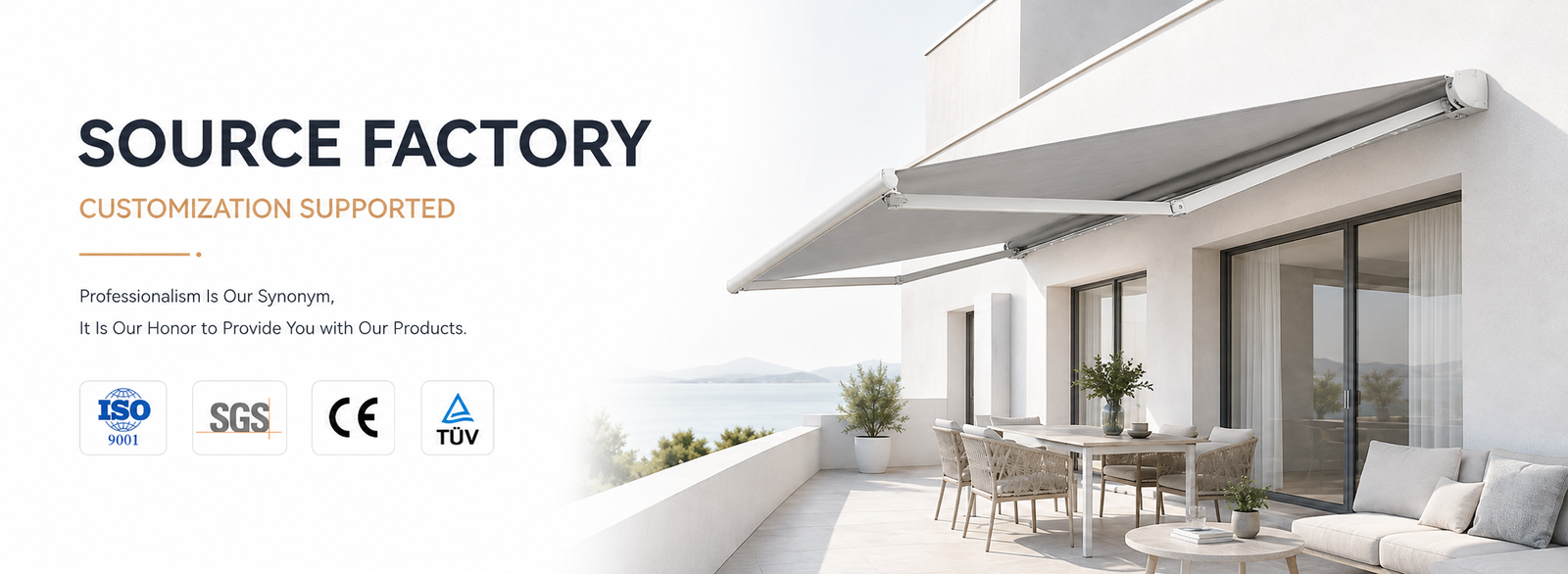
Quick answer: A commercial awning wind rating is a tested performance class for a complete awning system—not a universal promise that the product can remain open at every published local wind speed. Buyers should match the awning type, tested wind pressure, projection, fixing substrate, anchor design, controls and operating plan to the project’s actual exposure.
For distributors, contractors and hospitality operators, the painful failure is rarely “the fabric was not strong enough.” More often, the quotation was based only on width and projection, while the project exposure, façade material, mounting height, corner turbulence and automatic retraction strategy were never confirmed. The result can be excessive arm movement, loose brackets, torn fabric, water pockets, callbacks or a system that must be closed whenever customers need it most.
This guide explains nine checks that turn a vague request for a “windproof awning” into a buildable specification. It applies to folding-arm awnings, pergola awnings, retractable fabric roofs and guided outdoor screens, but the final design must always follow the local building code and a qualified engineer’s review.
1. Understand What a Commercial Awning Wind Rating Means
A wind class normally describes how a tested specimen performed under defined pressure and safety conditions. It is not the same as the basic wind speed printed on a regional map. The European Union’s Commission Delegated Regulation (EU) 2019/1188 establishes wind-load performance classes for external blinds and awnings, with different tables for product families such as pergola awnings, folding-arm awnings and guided fabric systems.
For procurement teams, the commercial awning wind rating must be verified against the applicable product family and exact tested configuration.
This distinction matters. A pergola awning guided on rails behaves differently from an unsupported folding-arm awning. Never transfer the class of one product family to another, and never assume a small test sample automatically represents a much larger custom span.
| Question | Why it matters | Evidence to request |
|---|---|---|
| Which product family was tested? | Folding arms, guided screens and pergola awnings have different load paths. | Test report identifying the tested system. |
| What specimen size was tested? | Width and projection change fabric tension, arm leverage and deflection. | Test dimensions and configuration. |
| What wind pressure/class was achieved? | The class must be read in the correct product table. | Declared performance and applicable standard. |
| Which brackets and anchors were used? | The tested awning can still fail if the building connection is weaker. | Bracket layout and anchoring requirements. |
2. Define the Actual Site Exposure
Start with the installation location rather than the catalog. Coastal promenades, open rooftops, building corners, elevated terraces and gaps between buildings can experience higher suction and turbulence than a sheltered courtyard. Record the project address, mounting height, orientation, surrounding obstructions and whether the awning sits near an edge or corner zone.
For projects governed by U.S. practice, ASCE/SEI 7-22 covers design loads including wind, rain and snow. The local engineer uses the applicable code, risk category, exposure and geometry to determine design pressures. The awning supplier should receive those requirements; the supplier should not replace the engineer by guessing a site wind speed from a city name.
3. Confirm Width, Projection and Bay Layout
The commercial awning wind rating should be reviewed again whenever width, projection or support spacing changes.
Projection creates leverage. Two awnings with the same width but different projections do not impose the same reactions on the wall. Likewise, one oversized bay may behave very differently from two smaller bays with a controlled joint. Provide finished width, projection, mounting height, pitch, front-bar height and allowable post locations before requesting a final quotation.
- Width: clear opening plus required side coverage.
- Projection: shaded depth measured horizontally.
- Pitch: required drainage angle and head clearance.
- Bay strategy: single module, coupled modules or post-supported system.
4. Match the Product Type to the Exposure
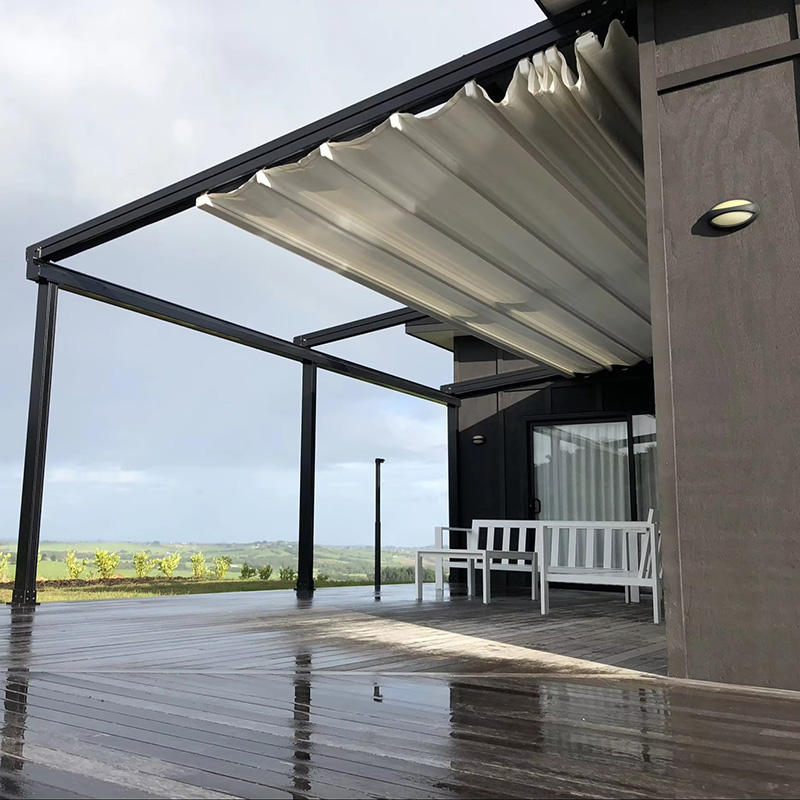
A folding-arm awning provides a clean, column-free façade solution, but it should normally retract when wind exceeds its operating limit. A rail-guided motorized retractable roof awning transfers loads through guides and supporting frames, making it better suited to many larger hospitality terraces. A motorized louvered pergola provides a rigid aluminum roof system when the project needs controlled ventilation, drainage and more permanent weather protection.
For lateral wind and low-angle sun, add a compatible motorized windproof zip screen. Treat the roof and side screens as one coordinated envelope; closing every side can increase pressure on the enclosure, so operating instructions must reflect the tested configuration.
5. Engineer Brackets, Anchors and the Supporting Structure
The strongest awning is only as reliable as its connection. Concrete, solid masonry, hollow brick, insulated façade systems, timber framing and steel beams require different fixing strategies. Ask for substrate drawings and avoid approving anchors from photos alone. Where insulation creates stand-off distance, the bracket may need a thermal-break spacer or engineered sleeve to prevent crushing and bending.
The responsible project engineer should verify pull-out, shear, edge distance, embedment, bracket spacing and the capacity of the supporting wall or beam. Chemical anchors require correct hole cleaning, curing time and substrate-specific approval. Installation torque and inspection records should be part of handover.
6. Specify Fabric Tension, Drainage and Water Management
Wind and rain interact. Insufficient pitch or tension can allow water to pond, increasing membrane load and changing the shape exposed to wind. Specify the fabric type, seam method, minimum roof pitch, gutter path and acceptable use during rain. Waterproof fabric does not mean the whole open awning is suitable for unattended storm operation.
For a comparison of fixed and retractable coverage, see our awning vs canopy buyer guide. If the project faces snow, typhoon or extreme rainfall, also review the weather-resistant pergola checklist.
7. Use Wind Sensors and Safe Control Logic
A higher commercial awning wind rating does not remove the need for automatic retraction and a clear operating policy.
A wind sensor is a risk-control device, not a structural upgrade. Define the trigger threshold, delay, fail-safe behavior, manual override and what happens during a power failure. The control strategy should retract the awning before conditions exceed its safe operating range, allowing for gusts and sensor location.
For B2B projects, request a wiring diagram, motor rating, ingress-protection information, control protocol and commissioning checklist. Confirm whether the system integrates with dry contacts, building management systems or smart relays. Keep emergency operation instructions accessible to facility staff.
8. Verify Manufacturing and Quality-Control Records
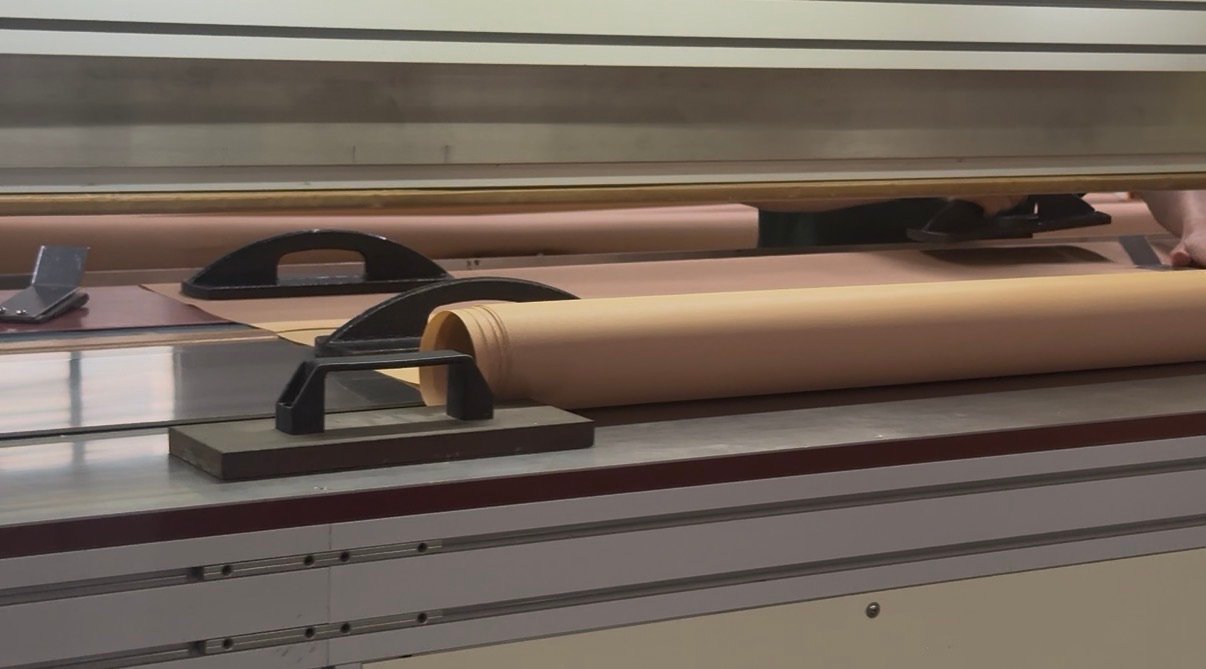
Repeatable performance depends on extrusion dimensions, arm geometry, weld quality, fastener grade, fabric cutting, motor limits and final assembly. A professional supplier should be able to discuss incoming material checks, production tolerances, trial assembly and packaging protection. Review LINGYUE’s factory and quality-control workflow before specifying a custom project.
9. Put the Operating Envelope in the Purchase Order
Record the selected commercial awning wind rating and its supporting test reference directly in the purchase documents.
The purchase order should state the product model, dimensions, finish, fabric, motor voltage, wind-performance evidence, bracket layout, anchor responsibility, drainage assumptions and operating limitations. Include required shop drawings, samples, test documents, packing marks, spare parts and installation manuals. If a claim is important, make it measurable and document-based.
Before production, ask the supplier to confirm:
- Which tested configuration is closest to the proposed system?
- Whether the custom size remains within the validated range.
- Who calculates and supplies anchors or foundations.
- When the awning must retract and how sensors are commissioned.
- Which exclusions apply to storms, snow, standing water or unattended use.
Commercial Awning Wind Rating FAQ
Is a higher wind class always better?
Only when the class applies to the same product family, specimen size and test method. Product suitability still depends on the site pressure, anchors and operating strategy.
Can I convert wind class directly to kilometres per hour?
A simple universal conversion is misleading because design pressure depends on exposure, height, shape, gust effects and local code factors. Use pressure-based engineering and the applicable standard.
Should an awning remain open during a typhoon or hurricane?
No retractable awning should be assumed suitable for severe storms unless the complete configuration is specifically engineered and documented for that use. A planned retraction and shutdown procedure is essential.
What information should I send for a quotation?
Send project address, drawings, width, projection, mounting height, substrate, desired product type, electrical standard, finish, fabric, local design pressures and the expected operating conditions.
Get a Project-Specific Awning Review
Send your dimensions, elevation drawings, substrate information and local wind-design requirements. LINGYUE will help distributors and contractors compare suitable retractable awning, pergola and guided-screen configurations.
Technical references: EU 2019/1188 wind-load classes for external blinds and awnings; ASCE/SEI 7-22 design loads.