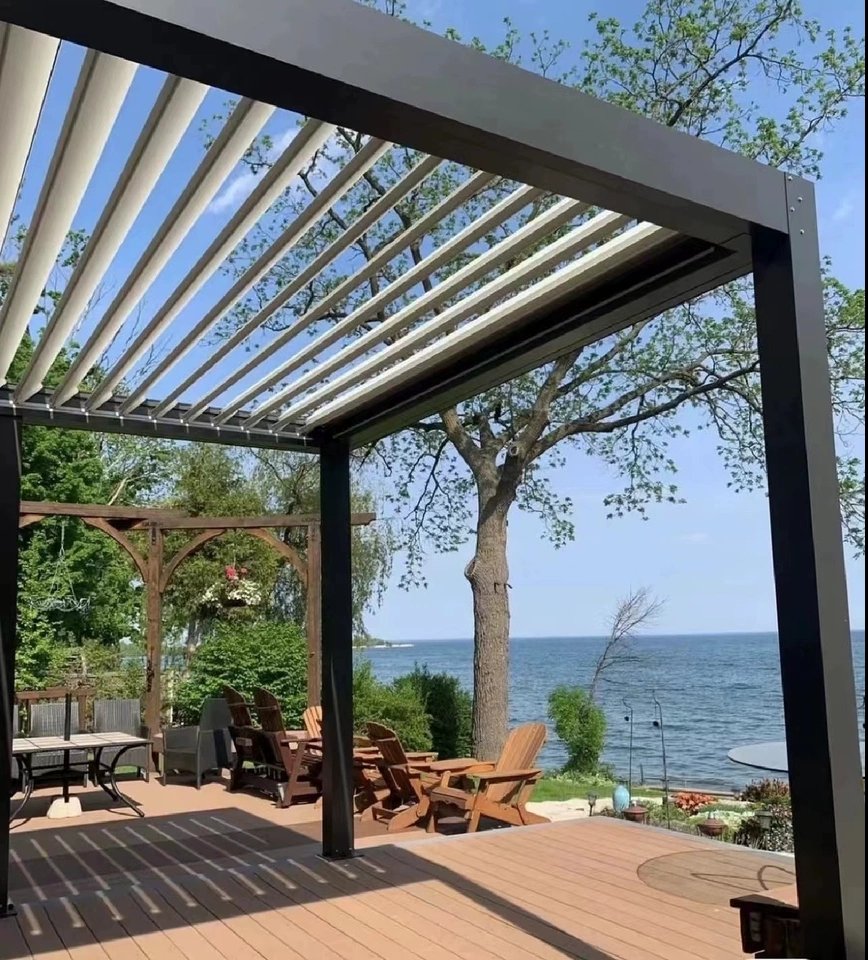
Quick answer: A coastal aluminum pergola needs more than a “powder-coated” label. Long-term performance depends on the exposure category, aluminum alloy and temper, surface pretreatment, coating specification, film continuity, fastener compatibility, drainage details, quality records, packaging and maintenance plan.
Salt-bearing moisture exposes every weak point in an outdoor shading system. A beautiful sample can still become a costly project problem when cut edges were not protected, pretreatment was inconsistent, stainless steel touched aluminum without isolation, drainage trapped water inside a beam, or protective film remained on the extrusion after installation.
For distributors, architects and contractors, corrosion risk also affects warranty discussions, replacement logistics and brand reputation. This guide turns the broad request for a “marine-grade pergola” into nine verifiable purchasing checks. It is a specification framework, not a substitute for a local corrosion engineer or the project’s governing standards.
1. Define the Coastal Exposure Before Selecting a Finish
Distance from the sea is useful but incomplete. Wind direction, surf, salt fog, humidity, rainfall, industrial pollution, sheltering, mounting height and cleaning access all influence exposure. A sheltered beachfront courtyard can retain salt deposits longer than a façade washed regularly by rain. Pool chemicals and rooftop cooling systems can add another source of aggressive contaminants.
Record the project address, elevation, distance to salt water, orientation, nearby pools or industry, and the planned cleaning interval. For a coastal aluminum pergola, the finish specification should respond to these site conditions rather than relying on one global coating description.
| Exposure input | Procurement question | Why it matters |
|---|---|---|
| Salt source and prevailing wind | Will salt spray reach the structure directly? | Direct deposition increases cleaning and coating demands. |
| Rain washing | Are beams and undersides naturally rinsed? | Sheltered surfaces can accumulate contaminants. |
| Wet time | Does moisture remain in joints or channels? | Longer wet periods increase corrosion opportunity. |
| Maintenance access | Can gutters, tracks and fasteners be rinsed? | Good design must support the required care plan. |
2. Verify the Aluminum Alloy and Temper
Material selection for a coastal aluminum pergola must be tied to the structural drawings and exposure.
Architectural pergola frames commonly use extruded aluminum because it combines low weight, formability and natural oxide protection. However, “aluminum” is not a complete material specification. Request the alloy, temper, extrusion dimensions and material certificate for structural profiles. 6xxx-series alloys such as 6063 are widely used for architectural extrusions, while temper selection affects strength, forming and machining.
The structural engineer must verify section properties, span, deflection, connection details and local loads. A corrosion-resistant base material does not eliminate the need for proper coating, and a strong temper does not correct poor drainage or incompatible fasteners.
3. Specify Surface Preparation and Pretreatment
For every coastal aluminum pergola, consistent pretreatment is the foundation of coating adhesion.
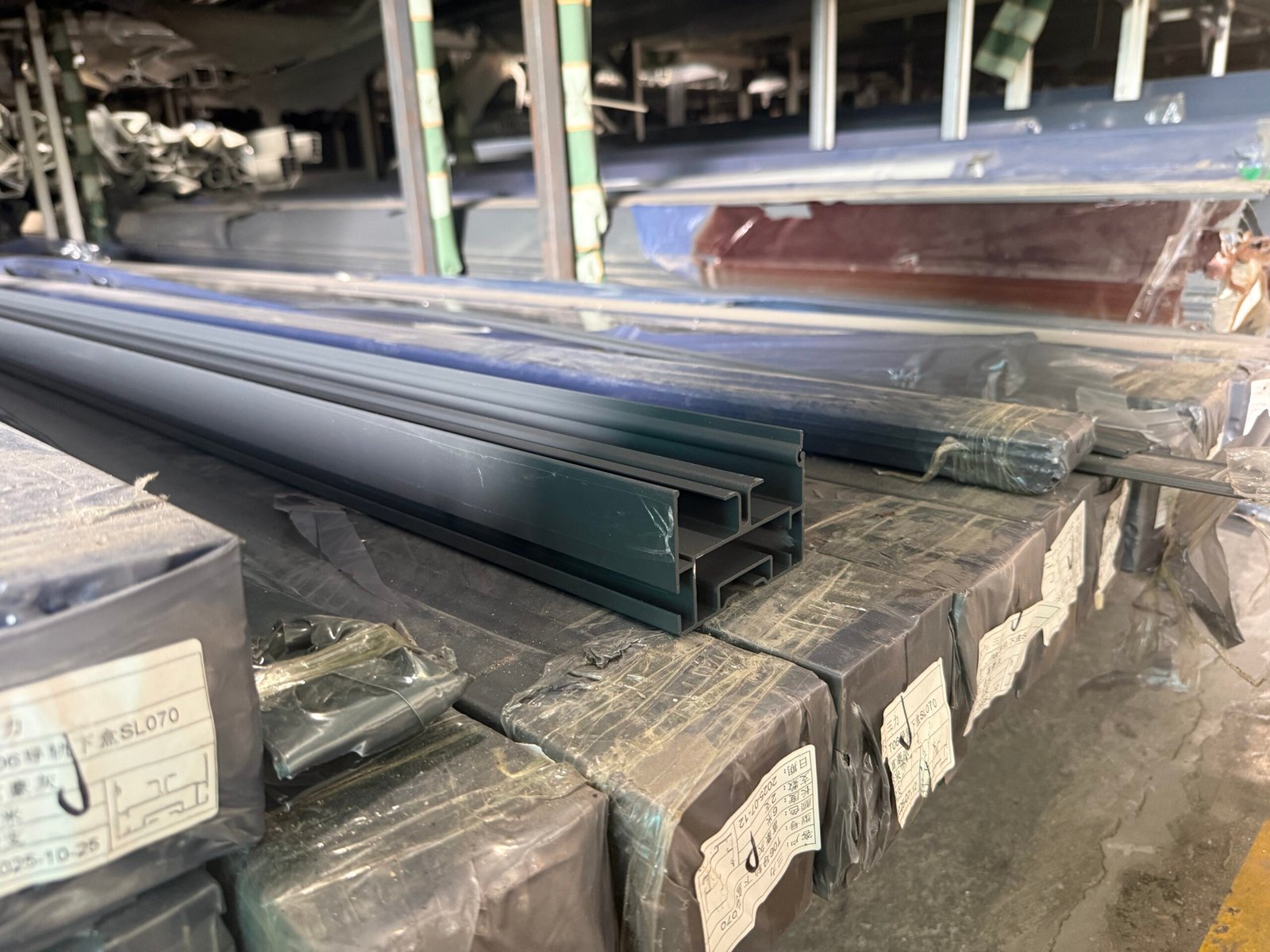
Coating performance begins before powder reaches the extrusion. Oil, oxide, dust and machining residues can reduce adhesion. The process normally includes cleaning, rinsing and a suitable conversion pretreatment before the finish coat. The exact chemistry and control limits should follow the chosen coating system and applicable environmental requirements.
Ask the supplier how bath concentration, pH, temperature, rinse quality and line speed are monitored. For cut, drilled or machined parts, confirm whether fabrication happens before final finishing and how exposed areas are treated. A coastal aluminum pergola assembled from post-coated parts can have vulnerable cuts if the process is not planned.
4. Choose a Coating Performance Specification—not Just a Color
Color references such as RAL define appearance; they do not by themselves define pretreatment, resin durability, adhesion, film integrity or weathering performance. For architectural aluminum, the Fenestration and Glazing Industry Alliance publishes the AAMA 2603, 2604 and 2605 family of finish specifications. FGIA describes them as progressively stronger “good, better, best” performance categories for factory-applied organic coatings.
Review the current FGIA finish-document update with the project specifier and coating supplier. Select the appropriate current document based on exposure, desired appearance retention and service expectations. Do not claim compliance from powder brand alone; request process and test evidence for the finished aluminum.
5. Control Film Thickness, Coverage and Cure
A coastal aluminum pergola should be inspected at edges, channels and recesses—not only on broad flat faces.
Average thickness can hide weak areas. Edges, corners, recesses, screw channels and complex profile geometry may receive less coating than flat faces. Agree on the measurement method, minimum acceptance criteria, color tolerance, gloss range and sampling plan. Confirm cure using the coating manufacturer’s specified time and metal temperature—not only oven air temperature.
- Appearance: color, gloss, texture and visible defects under agreed lighting.
- Film: thickness readings across representative faces and difficult geometry.
- Adhesion: documented test method and acceptance criteria.
- Cure: production records tied to the coating system.
Buyer warning: A very thick coating is not automatically better. Incorrect cure, contamination or poor pretreatment can still cause adhesion failure. Specify the complete approved system.
6. Interpret Salt-Spray Tests Correctly
ISO 9227:2022 describes neutral salt spray, acetic acid salt spray and copper-accelerated acetic acid salt spray procedures for evaluating corrosion resistance and coating defects. The ISO summary also warns that these tests are not intended to rank materials generally or predict long-term corrosion resistance in service.
Therefore, a salt-spray-hour claim needs context: test method, specimen preparation, scribe or cut condition, exposure duration, acceptance criteria and report issuer. Use it as one quality-control indicator together with adhesion, pretreatment, weathering, design details and field maintenance—not as a direct service-life promise.
7. Manage Fasteners and Dissimilar-Metal Contact
Stainless steel fasteners are often selected for coastal work, but grade, exposure and connection design still matter. When stainless steel, carbon steel, copper-containing materials or other metals contact aluminum in a wet electrolyte, galvanic action may accelerate attack at the aluminum. Use compatible fasteners, isolating washers or sleeves, sealed interfaces and approved joint compounds where the design requires them.
Do not trap abrasive metal swarf from drilling on coated surfaces. Remove debris promptly, repair damaged finish with an approved method and avoid carbon-steel tools that can leave contaminating particles. Confirm replacement fastener specifications in the maintenance manual so future service does not introduce incompatible parts.
8. Design Out Water Traps and Crevices
Integrated gutters, hollow beams, guide rails and base plates can collect salty water if drain paths are undersized, blocked or incorrectly sloped. Confirm drainage direction, outlet size, access for cleaning, weep holes, sealed end conditions and the interface with foundations. Base plates should not sit permanently in standing water, soil or wet grout.
For projects combining rain protection and adjustable shade, compare the drainage logic of a motorized louvered pergola with an aluminum polycarbonate patio canopy. Also review our storm-ready pergola checklist for wind, rain and snow considerations.
9. Require QA Records, Protective Packaging and a Maintenance Plan
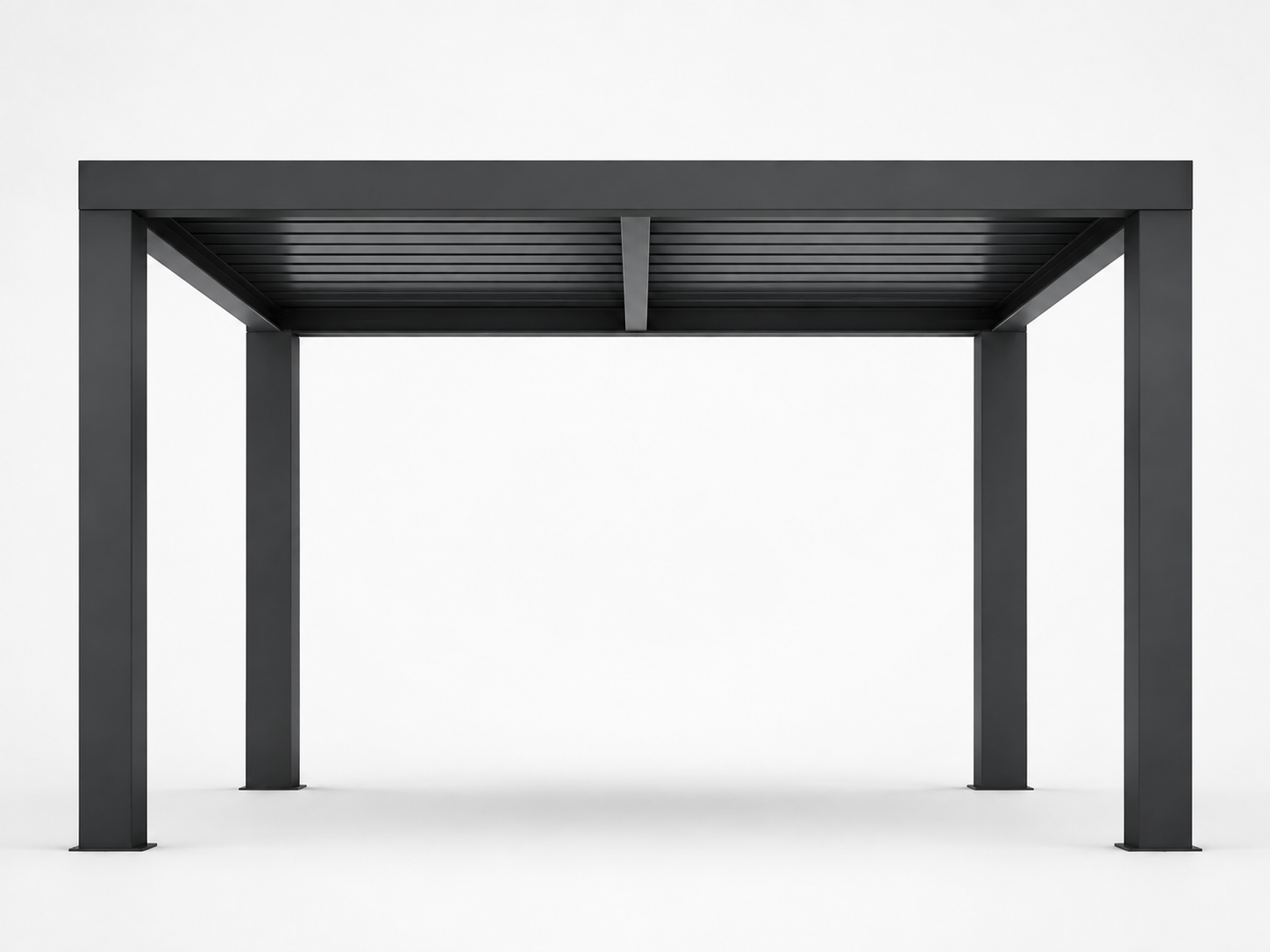
The final coastal aluminum pergola quality plan should cover production, packing, installation and maintenance.
Before shipment, request finish inspection records, photos, packing list, touch-up procedure and traceability to the approved sample. Separate coated profiles with non-abrasive material, protect corners and prevent trapped condensation during long sea freight. Packaging should survive handling without bonding permanently to the finish.
At installation, remove protective films within the manufacturer’s recommended period, rinse construction dust and inspect every cut, fastener and drain. Establish a fresh-water cleaning schedule appropriate to the exposure. Record cleaning and inspection because maintenance is part of the corrosion-control system—not an optional cosmetic task.
Visit LINGYUE’s factory page to review production and packaging capabilities, and use the non-toxic outdoor materials guide when the project also requires REACH, RoHS or coating-safety documentation.
Coastal Project Submittal Checklist
- Site exposure description and local environmental requirements.
- Aluminum alloy, temper, profile drawings and material certificates.
- Pretreatment process and coating performance specification.
- Approved color, gloss, texture and physical sample.
- Film-thickness, adhesion and cure-control records.
- Relevant corrosion-test reports with clear acceptance criteria.
- Fastener grade, isolation method and joint sealant compatibility.
- Drainage, base-plate and maintenance-access details.
- Packing method, touch-up procedure and cleaning schedule.
Coastal Aluminum Pergola FAQ
Is powder coating enough for every coastal site?
No. Performance depends on exposure, pretreatment, coating system, coverage, cure, design details, fasteners and maintenance. “Powder-coated” alone is not a complete specification.
Does a salt-spray result predict service life?
No. ISO 9227 states that salt-spray methods are useful for detecting coating discontinuities and maintaining quality, but they are not intended to predict long-term corrosion resistance in service.
Should I use 304 or 316 stainless fasteners?
The correct grade depends on exposure, load, availability and local engineering requirements. The connection must also manage galvanic contact with aluminum; stainless grade alone does not solve the whole detail.
How often should a coastal pergola be cleaned?
The interval should be set from actual salt deposition, rain washing and access conditions. Direct coastal exposure normally needs more frequent fresh-water rinsing and inspection than an inland project.
Request a Coastal Pergola Specification Review
Send your project location, drawings, finish requirements, local wind loads and maintenance expectations. LINGYUE will help B2B buyers define the aluminum, coating, fastener, drainage and packaging information needed for quotation.
Technical references: ISO 9227:2022 salt-spray test methods; FGIA architectural aluminum finish specifications update.